Buy britisch.eu ?
We are moving the project
britisch.eu .
Are you interested in purchasing the domain
britisch.eu ?
domain@kv-gmbh.de · 0541-91531010
Buy britisch.eu ?
Which microscope is a nano-microscope?
A nano-microscope is a type of microscope that is capable of imaging objects at the nanoscale, which is on the order of billionths of a meter. One example of a nano-microscope is the scanning tunneling microscope (STM), which uses a sharp metal tip to scan the surface of a sample and create a detailed image of its atomic structure. Another example is the atomic force microscope (AFM), which uses a sharp tip to measure forces between the tip and the sample surface, allowing for high-resolution imaging of nanoscale features. Both of these microscopes are capable of imaging at the nanoscale and are therefore considered nano-microscopes. **
What are microscope droplets?
Microscope droplets are tiny liquid particles that can form on the surface of a microscope lens or slide. These droplets can distort the image being viewed under the microscope, making it difficult to see the specimen clearly. Microscope droplets can be caused by condensation from the surrounding air, or by the transfer of liquid from the specimen onto the lens. It is important to regularly clean and maintain the microscope to prevent the formation of these droplets and ensure accurate observations. **


Similar search terms for Microscope
Top-Angebote
Products related to Microscope:
-
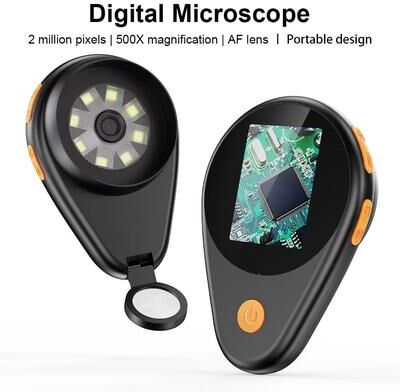
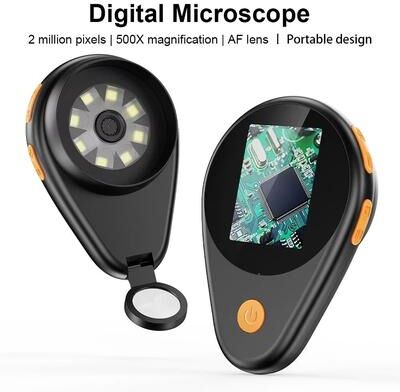
Inspire Select 500X Auto Focus Digital Microscope Portable 2MP Electronic Magnifying Glass For Jewelry & Watch Repair 500X Auto Focus Digital Microscope Portable 2MP Electronic Magnifying Glass For Jewelry & Watch RepairExplore tiny details with stunning clarity using this portable digital microscope designed for hobbyists, students, collectors, and repair professionals. Featuring 500X magnification and a highdefinition 2MP camera, this electronic magnifying glass...159,98 $*Shipping: 0,00 $Secure redirect to the provider
-
Uplift Essentials Auto Focus Digital Microscope 500x Magnification 2MP Portable Lens High Yield Jewelry & Watch Repair Hub Auto Focus Digital Microscope 500x Magnification 2MP Portable Lens High Yield Jewelry & Watch Repair HubAchieve visual optimization with the Auto Focus Digital Microscope. Specifically engineered for imaging transparency, this highperformance optical tool acts as a vital tool for inspection efficiency, neutralizing the limitations of traditional...129,97 $*Shipping: 0,00 $Secure redirect to the provider
-
GeoSafari Microscope Science Set for Kids - 50x-400x Magnification - Includes Prepared Slides and Activity JournalExplore science up close with the GeoSafari Microscope Science Set. This practical introduction to observing specimens and carrying out simple experiments is perfect for young scientists. With magnification from 50x to 400x, children can examine the included prepared slides before creating their own samples. The set includes a GeoSafari microscope, an activity journal with an experiment guide, 10 prepared slides, 5 blank slides, 10x and 20x magnifying eyepieces, a petri dish, pipette, and test tube with stopper. This hands-on exploration set supports learning by doing and is designed for children aged 7 and over. It introduces laboratory equipment in an accessible way. The microscope requires 2 AAA batteries, which are not included. The activity journal and packaging are multilingual.26,49 £*Shipping: 3,95 £Secure redirect to the provider
-
Learning Resources GeoSafari Jr. My First Microscope for Kids - 3+ - 7.6 x 25.7 x 35.6 cmIntroduce young explorers to the world of science with the GeoSafari Jr. My First Microscope. Designed for preschoolers by a scientist mom, this beginner microscope is a fully functional science tool made for little hands and curious minds. With two large eyepieces and a chunky, easy-to-turn focusing knob, kids can discover the details of everyday objects with ease. The bright LED light, activated by a simple push-button, brings every fascinating feature into view. This microscope is ideal for kids aged 3 and above, making it a great tool for sparking a love of science and exploration. Dimensions: 7.6 x 25.7 x 35.6 cm.19,79 £*Shipping: 3,95 £Secure redirect to the provider


-
What are microscope objectives?
Microscope objectives are the lenses located at the lower end of a microscope that are responsible for magnifying the specimen being observed. They come in various magnification powers, such as 4x, 10x, 40x, and 100x, and are often color-coded for easy identification. The quality and design of microscope objectives can greatly impact the clarity and resolution of the images produced. Different objectives are used for different levels of magnification, allowing scientists and researchers to view specimens at various levels of detail. **
-
What are the advantages of a fluorescence microscope compared to a light microscope and an electron microscope? Thank you.
A fluorescence microscope has several advantages compared to a light microscope and an electron microscope. Firstly, it allows for the visualization of specific structures or molecules within a sample by using fluorescent dyes or proteins, which is not possible with a light microscope. Secondly, it provides higher resolution and better contrast compared to a light microscope, allowing for more detailed imaging of the sample. Lastly, it is less damaging to the sample compared to an electron microscope, which often requires the sample to be coated with heavy metals and subjected to a vacuum, potentially altering its natural state. **
-
What are the differences between a stereo microscope and a light microscope?
The main difference between a stereo microscope and a light microscope is their intended use. A stereo microscope is designed for viewing larger, three-dimensional objects at lower magnifications, while a light microscope is used for viewing smaller, two-dimensional specimens at higher magnifications. Additionally, a stereo microscope has two eyepieces and provides a three-dimensional view of the specimen, while a light microscope typically has one eyepiece and provides a two-dimensional view. Finally, the stereo microscope has a lower magnification range compared to the light microscope, which can achieve much higher magnifications. **
-
What is the difference between an electron microscope and a light microscope?
The main difference between an electron microscope and a light microscope is the type of radiation used to visualize the specimen. Electron microscopes use a beam of electrons to create a highly detailed image of the specimen, allowing for much higher magnification and resolution compared to light microscopes, which use visible light to visualize the specimen. This allows electron microscopes to visualize much smaller structures and details in the specimen. Additionally, electron microscopes are capable of producing 3D images of the specimen, while light microscopes typically produce 2D images. **


How does this microscope work?
A microscope works by using lenses to magnify small objects that are not visible to the naked eye. Light passes through the object being observed and is then magnified by the lenses in the microscope, allowing for a detailed view of the object. The magnified image is then viewed through the eyepiece or captured by a camera for further analysis. Microscopes can have different magnification levels and types of illumination to enhance the visibility of the object being studied. **
What is the microscope setting?
The microscope setting refers to the specific configuration and adjustments made to the microscope in order to observe and analyze a specimen. This includes the magnification level, focus, lighting, and any other settings that may be adjusted to optimize the view of the specimen. The microscope setting can vary depending on the type of specimen being observed and the specific details that need to be visualized. **
Top-Angebote
Products related to Microscope:
-
Scholastic Microscope (with smartphone adapter)Travel deep into the microscopic realm! With this high-quality student microscope, Thames & Kosmos unlocks wonders of the world that are too small to see with the naked eye. Plus, the universal smartphone adapter lets you use your own smartphone...42,99 $*Shipping: 0,00 $Secure redirect to the provider
-
Lisciani I Am A Genius Mini Microscope - Portable High Quality Microscope For On The Go Science Discovery For Kids - miniExplore the world of science with the Lisciani I Am A Genius Mini Microscope, a compact and portable microscope designed for on-the-go discovery. This high-quality microscope is perfect for curious young researchers who want to explore pond water, leaf veins, or fabric fibers anywhere. The included step-by-step manual guides users through core techniques, helping them frame questions, prepare samples, and capture insights. The microscope's ultra-compact design fits easily in backpacks and coats, making it ideal for classrooms, field trips, and family outings. With clear optics and a sturdy build, this mini microscope is perfect for budding biologists who want to learn and explore the world around them.10,89 £*Shipping: 3,95 £Secure redirect to the provider
-
Inspire Select 500X Auto Focus Digital Microscope Portable 2MP Electronic Magnifying Glass For Jewelry & Watch Repair 500X Auto Focus Digital Microscope Portable 2MP Electronic Magnifying Glass For Jewelry & Watch RepairExplore tiny details with stunning clarity using this portable digital microscope designed for hobbyists, students, collectors, and repair professionals. Featuring 500X magnification and a highdefinition 2MP camera, this electronic magnifying glass...159,98 $*Shipping: 0,00 $Secure redirect to the provider
-
Uplift Essentials Auto Focus Digital Microscope 500x Magnification 2MP Portable Lens High Yield Jewelry & Watch Repair Hub Auto Focus Digital Microscope 500x Magnification 2MP Portable Lens High Yield Jewelry & Watch Repair HubAchieve visual optimization with the Auto Focus Digital Microscope. Specifically engineered for imaging transparency, this highperformance optical tool acts as a vital tool for inspection efficiency, neutralizing the limitations of traditional...129,97 $*Shipping: 0,00 $Secure redirect to the provider
-
Which microscope is a nano-microscope?
A nano-microscope is a type of microscope that is capable of imaging objects at the nanoscale, which is on the order of billionths of a meter. One example of a nano-microscope is the scanning tunneling microscope (STM), which uses a sharp metal tip to scan the surface of a sample and create a detailed image of its atomic structure. Another example is the atomic force microscope (AFM), which uses a sharp tip to measure forces between the tip and the sample surface, allowing for high-resolution imaging of nanoscale features. Both of these microscopes are capable of imaging at the nanoscale and are therefore considered nano-microscopes. **
-
What are microscope droplets?
Microscope droplets are tiny liquid particles that can form on the surface of a microscope lens or slide. These droplets can distort the image being viewed under the microscope, making it difficult to see the specimen clearly. Microscope droplets can be caused by condensation from the surrounding air, or by the transfer of liquid from the specimen onto the lens. It is important to regularly clean and maintain the microscope to prevent the formation of these droplets and ensure accurate observations. **
-
What are microscope objectives?
Microscope objectives are the lenses located at the lower end of a microscope that are responsible for magnifying the specimen being observed. They come in various magnification powers, such as 4x, 10x, 40x, and 100x, and are often color-coded for easy identification. The quality and design of microscope objectives can greatly impact the clarity and resolution of the images produced. Different objectives are used for different levels of magnification, allowing scientists and researchers to view specimens at various levels of detail. **
-
What are the advantages of a fluorescence microscope compared to a light microscope and an electron microscope? Thank you.
A fluorescence microscope has several advantages compared to a light microscope and an electron microscope. Firstly, it allows for the visualization of specific structures or molecules within a sample by using fluorescent dyes or proteins, which is not possible with a light microscope. Secondly, it provides higher resolution and better contrast compared to a light microscope, allowing for more detailed imaging of the sample. Lastly, it is less damaging to the sample compared to an electron microscope, which often requires the sample to be coated with heavy metals and subjected to a vacuum, potentially altering its natural state. **
Similar search terms for Microscope
-
GeoSafari Microscope Science Set for Kids - 50x-400x Magnification - Includes Prepared Slides and Activity JournalExplore science up close with the GeoSafari Microscope Science Set. This practical introduction to observing specimens and carrying out simple experiments is perfect for young scientists. With magnification from 50x to 400x, children can examine the included prepared slides before creating their own samples. The set includes a GeoSafari microscope, an activity journal with an experiment guide, 10 prepared slides, 5 blank slides, 10x and 20x magnifying eyepieces, a petri dish, pipette, and test tube with stopper. This hands-on exploration set supports learning by doing and is designed for children aged 7 and over. It introduces laboratory equipment in an accessible way. The microscope requires 2 AAA batteries, which are not included. The activity journal and packaging are multilingual.26,49 £*Shipping: 3,95 £Secure redirect to the provider
-
Learning Resources GeoSafari Jr. My First Microscope for Kids - 3+ - 7.6 x 25.7 x 35.6 cmIntroduce young explorers to the world of science with the GeoSafari Jr. My First Microscope. Designed for preschoolers by a scientist mom, this beginner microscope is a fully functional science tool made for little hands and curious minds. With two large eyepieces and a chunky, easy-to-turn focusing knob, kids can discover the details of everyday objects with ease. The bright LED light, activated by a simple push-button, brings every fascinating feature into view. This microscope is ideal for kids aged 3 and above, making it a great tool for sparking a love of science and exploration. Dimensions: 7.6 x 25.7 x 35.6 cm.19,79 £*Shipping: 3,95 £Secure redirect to the provider
-
Santiveri Noglut Digestive Biscuits Cocoa GlutenNutrition and Supplements Snacks Santiveri Noglut Digestive Biscuits Cocoa Gluten An intensely flavored cookie, prepared with carefully selected natural ingredients (corn, whole brown sugar and cocoa). It is perfect if you are one of those who likes to have cookies with milk or vegetable drinks for breakfast. Treat yourself to the most delicious breakfast. Gluten-free food, specifically made for people with gluten intolerance or celiac disease, or who prefer to eat gluten-free. With natural ingredients, not genetically modified. Without preservatives. Made in an exclusive production line for gluten-free foods. With oleic acid, ideal for a healthy diet. Suitable for vegetarians. Weight: 200g. They are excellent adjuvants of good health. This product is beneficial for human health.2,42 £*Shipping: 3,99 £Secure redirect to the provider
-
What are the differences between a stereo microscope and a light microscope?
The main difference between a stereo microscope and a light microscope is their intended use. A stereo microscope is designed for viewing larger, three-dimensional objects at lower magnifications, while a light microscope is used for viewing smaller, two-dimensional specimens at higher magnifications. Additionally, a stereo microscope has two eyepieces and provides a three-dimensional view of the specimen, while a light microscope typically has one eyepiece and provides a two-dimensional view. Finally, the stereo microscope has a lower magnification range compared to the light microscope, which can achieve much higher magnifications. **
-
What is the difference between an electron microscope and a light microscope?
The main difference between an electron microscope and a light microscope is the type of radiation used to visualize the specimen. Electron microscopes use a beam of electrons to create a highly detailed image of the specimen, allowing for much higher magnification and resolution compared to light microscopes, which use visible light to visualize the specimen. This allows electron microscopes to visualize much smaller structures and details in the specimen. Additionally, electron microscopes are capable of producing 3D images of the specimen, while light microscopes typically produce 2D images. **
-
How does this microscope work?
A microscope works by using lenses to magnify small objects that are not visible to the naked eye. Light passes through the object being observed and is then magnified by the lenses in the microscope, allowing for a detailed view of the object. The magnified image is then viewed through the eyepiece or captured by a camera for further analysis. Microscopes can have different magnification levels and types of illumination to enhance the visibility of the object being studied. **
-
What is the microscope setting?
The microscope setting refers to the specific configuration and adjustments made to the microscope in order to observe and analyze a specimen. This includes the magnification level, focus, lighting, and any other settings that may be adjusted to optimize the view of the specimen. The microscope setting can vary depending on the type of specimen being observed and the specific details that need to be visualized. **
* All prices are inclusive of VAT and, if applicable, plus shipping costs. The offer information is based on the details provided by the respective shop and is updated through automated processes. Real-time updates do not occur, so deviations can occur in individual cases. ** Note: Parts of this content were created by AI.